






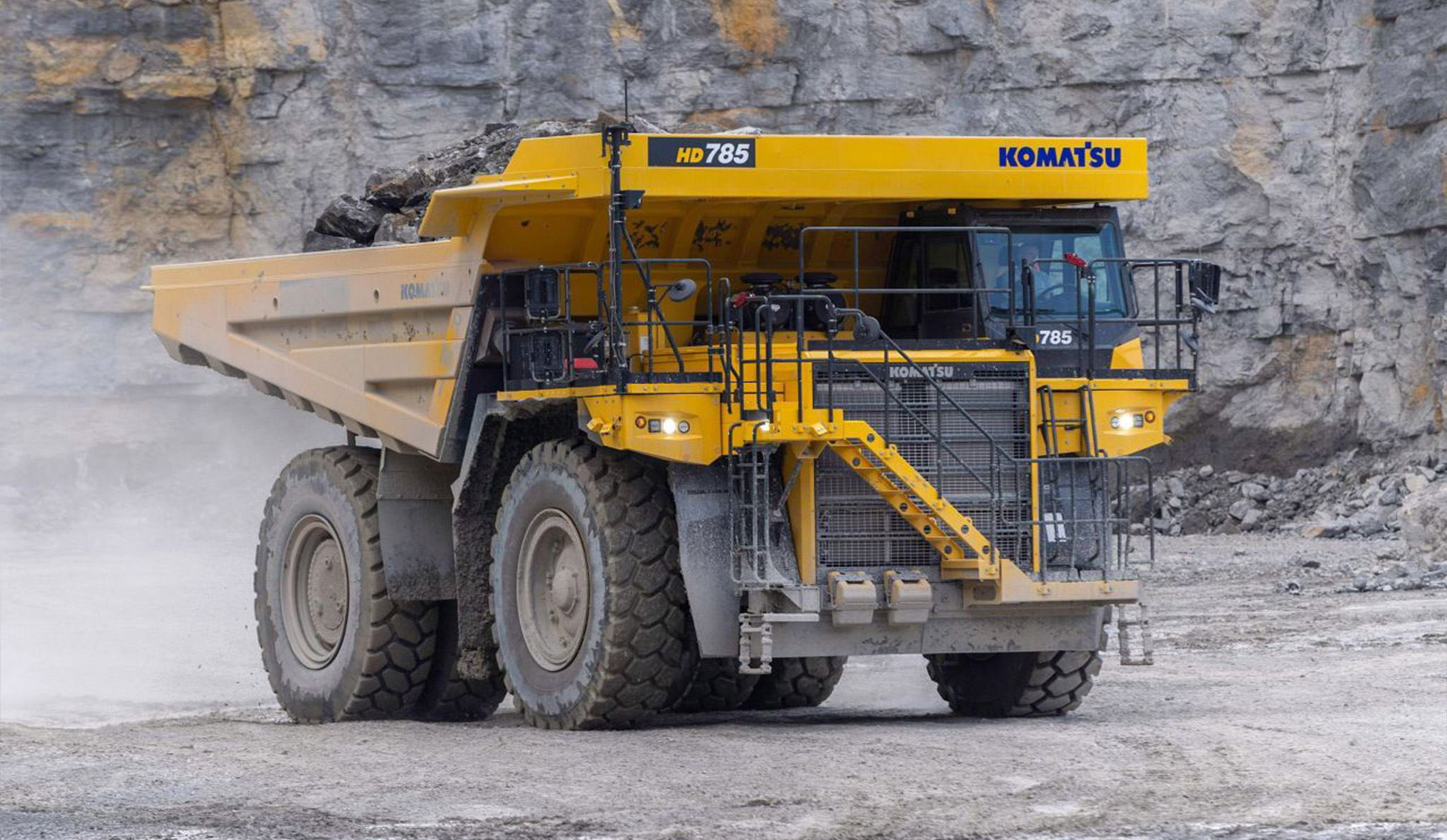
Starting in the second half of the year, SEMEP, our Mining Operations business unit, will begin operating a new fleet of large off-road equipment: Komatsu trucks and excavators with capacities of 100 and 125 tons, respectively.
This investment in this class of equipment is not an isolated decision. It reflects a structural shift in the Brazilian mining industry.
Why now?
Those who follow the sector know that mining operations in Brazil are becoming increasingly complex. As a result, operations involving large volumes of material movement and tighter execution timelines require equipment that ensures operational safety in the mine.
To support operations at this scale, it is essential to have a compatible fleet as well as years of technical experience in mining operations.
What changes in operations?
100-ton equipment allows the same volume of work to be performed in fewer cycles. In practice, this means higher productivity per operating hour, reduced traffic at loading areas and lower accumulated wear on the fleet throughout the contract. These are gains that clients directly perceive in operational efficiency.
In addition to load capacity, there is also a gain in availability. The Komatsu HD785 trucks and excavators in this class are designed for severe conditions, including high dust levels, steep slopes, continuous operation and fast return to operation after rainfall. This reduces downtime and improves delivery predictability for clients.
There are also two relevant side effects: with higher volume per cycle, fuel consumption per ton moved decreases and with fewer machines operating in the mine, personnel exposure in operational areas is reduced.
The difference goes beyond the fleet
Any mining contractor can purchase trucks. What differentiates Priner is everything that surrounds the fleet.
With SEMEP and its 36 years of experience and technical expertise in this type of operation and material handling, Priner now covers four fronts of the mining production cycle under a single platform: mining operations (mining, mine infrastructure and internal material handling); geotechnical infrastructure (containment structures, drainage, structural rehabilitation and dam works); electromechanical assembly (processing plants, conveyor belts and tailings pipelines); industrial inspection and integrity (non-destructive testing, criticality analysis and materials engineering).
When a client needs to expand mining capacity while raising a dam, assembling a new processing line and ensuring the integrity of existing assets, they can either hire four different suppliers or work with an experienced company that integrates all these fronts. This is the positioning we are building.
Next steps
The arrival of the new fleet is scheduled for the second half of the year, with phased mobilization according to contract demand.
This expansion reinforces Priner’s commitment to delivering excellence to the Brazilian mining sector.
 Compartilhar:

